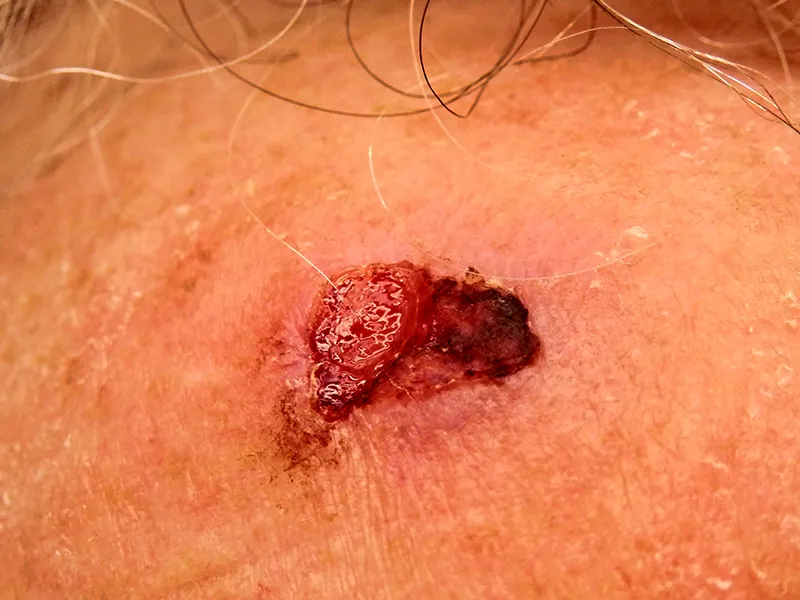
Squamous cell carcinoma (SCC) is the second most common form of skin cancer. It develops from squamous cells in the upper layers of the epidermis and is also strongly associated with cumulative UV exposure. Although many SCCs are successfully treated, some have the potential to grow more rapidly and spread to nearby lymph nodes or other parts of the body if left untreated.
Signs and Symptoms
SCC may appear as:
- A firm, red nodule
- A thickened or scaly patch
- A crusted or ulcerated lesion
- A sore that does not heal
- A lesion that becomes painful or tender
SCC frequently occurs on the face, ears, scalp, lips, neck and backs of the hands.
Risk Factors
Factors that may increase your risk include:
- Long-term sun exposure
- Fair skin
- Increasing age
- Weakened immune system
- Previous skin cancer
- Chronic wounds or inflamed skin
- Exposure to certain environmental carcinogens
Diagnosis
Diagnosis is usually confirmed through clinical examination and biopsy. Your doctor may recommend additional investigations if there are features suggesting a higher-risk tumour.
Treatment Options
Treatment is determined by the tumour’s size, location and risk profile. Options may include:
- Surgical excision
- Mohs micrographic surgery
- Radiation therapy
- Cryotherapy (exceptional cases)
- Systemic therapies for advanced disease
- Rhenium-SCT for selected superficial lesions where clinically appropriate
Early treatment provides the best opportunity for successful disease control.
This information is intended for educational purposes only and should not replace professional medical advice. Treatment decisions should always be made in consultation with a qualified healthcare professional.
Sources:
- Cancer Council Australia. Non-melanoma Skin Cancer (Keratinocyte Cancer). Available at: https://www.cancer.org.au/types-of-cancer/non-melanoma-skin-cancer (accessed August 2026).
- Cancer Council Australia. About Skin Cancer. Available at: https://www.cancer.org.au/types-of-cancer/skin-cancer/about-skin-cancer (accessed August 2026).
- Stratigos AJ, Garbe C, Lebbe C, et al. European interdisciplinary guideline on invasive cutaneous squamous cell carcinoma. Eur J Cancer. 2020;128:83–102.