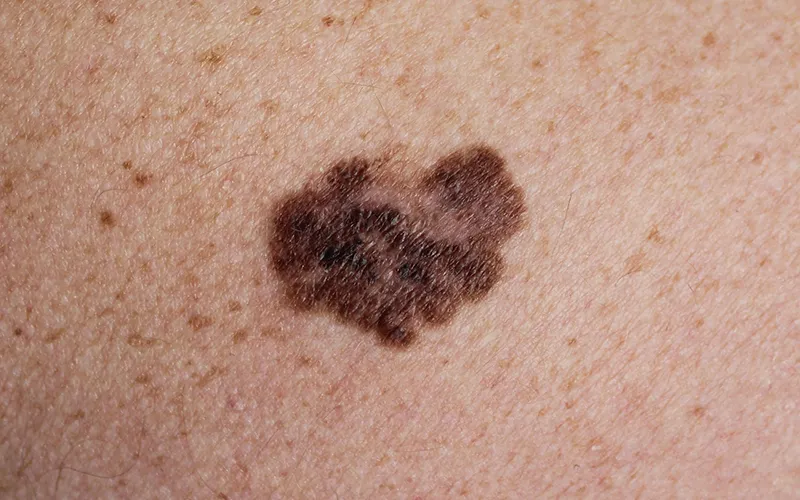
Melanoma is the most serious form of skin cancer. It develops from melanocytes, the pigment-producing cells that give skin its colour. Unlike most non-melanoma skin cancers, melanoma has a greater likelihood of spreading to other parts of the body if not detected and treated early.
Signs and Symptoms
Melanoma often develops from an existing mole or appears as a new pigmented lesion. The ABCDE guide can help identify suspicious changes:
- Asymmetry
- Border irregularity
- Colour variation
- Diameter (usually greater than 6 mm, although melanomas can be smaller)
- Evolving shape, size, colour or symptoms
Any new or changing skin lesion should be assessed by a healthcare professional.
Risk Factors
Melanoma risk may be increased by:
- Excessive UV exposure
- Frequent sunburn, particularly during childhood
- Fair skin
- Large numbers of moles
- Family history of melanoma
- Previous melanoma
- Weakened immune system
Diagnosis
Diagnosis usually begins with a skin examination followed by biopsy of any suspicious lesion. If melanoma is confirmed, additional tests may be recommended to determine the stage of the disease.
Treatment Options
Treatment depends on the stage and extent of the melanoma and may involve one or more of the following approaches:
- Surgical removal
- Immunotherapy
- Targeted therapy
- Radiation therapy in selected cases
- Chemotherapy in selected cases of advanced melanoma
- Combination therapies, where clinically appropriate
- Participation in clinical trials where appropriate
When detected early, melanoma is highly treatable, highlighting the importance of regular skin checks and prompt assessment of any suspicious skin changes.
Rhenium-SCT is indicated for selected non-melanoma skin cancers (e.g. BCC and SCC). Rhenium-SCT is contraindicated for treatment of melanoma. Your healthcare team will recommend the most appropriate treatment based on your individual diagnosis.
This information is intended for educational purposes only and should not replace professional medical advice. Treatment decisions should always be made in consultation with a qualified healthcare professional.
Sources:
- Cancer Council Australia. About Melanoma. Available at: https://www.cancer.org.au/types-of-cancer/melanoma/about-melanoma (accessed August 2026).
- Cancer Council Australia Melanoma Guidelines Working Party. Clinical Practice Guidelines for the Diagnosis and Management of Melanoma. Available at: https://www.cancer.org.au/clinical-guidelines/skin-cancer/melanoma (accessed August 2026).
- Australian Institute of Health and Welfare. Cancer Data in Australia. Canberra: AIHW; latest edition. Available at: https://www.aihw.gov.au/reports/cancer/cancer-data-in-australia/contents/about (accessed August 2026).