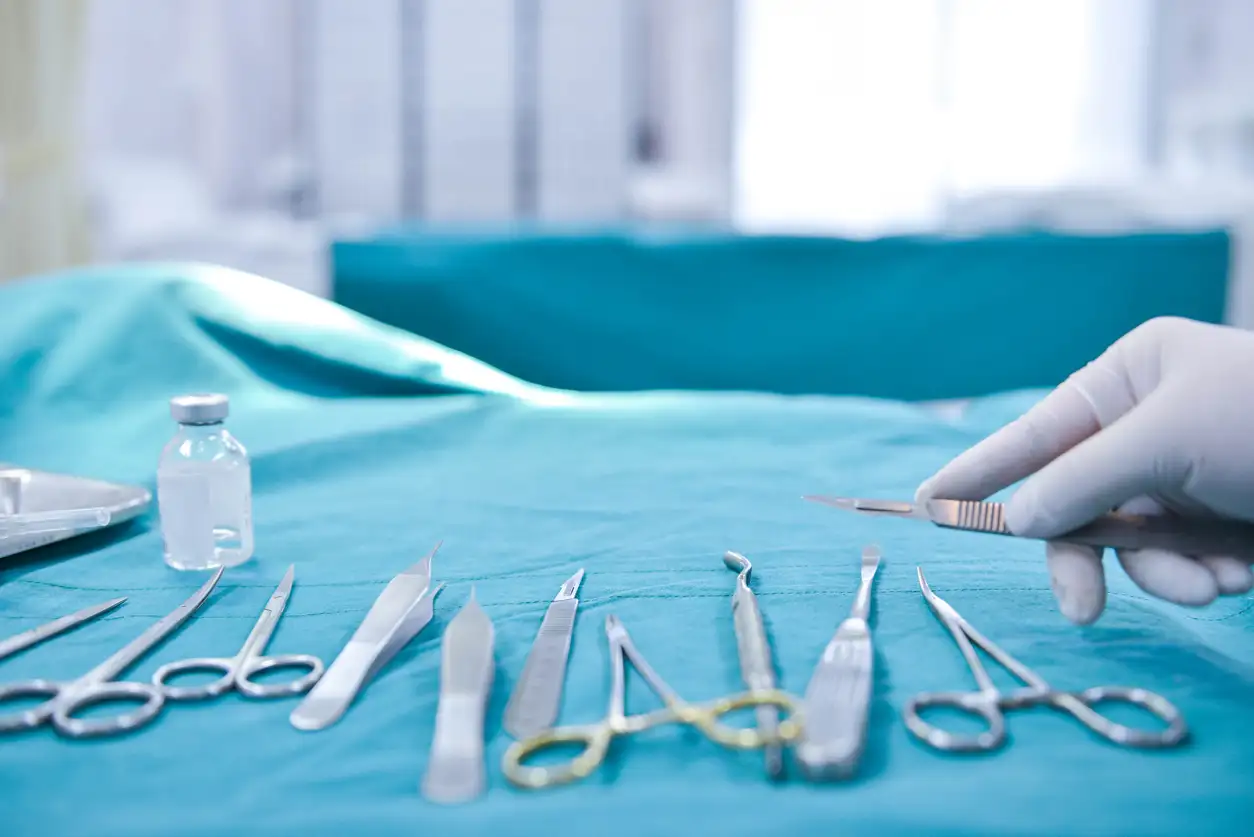
Understanding Surgical Treatment for NMSC
Surgery is one of the most commonly used treatment approaches for non-melanoma skin cancer (NMSC), including basal cell carcinoma (BCC) and squamous cell carcinoma (SCC). The goal of surgery is to remove the cancer while preserving as much healthy tissue as possible and reducing the risk of recurrence. The type of surgical procedure recommended will depend on several factors, including the size, location, subtype, and risk profile of the tumour, as well as individual patient considerations.
Most skin cancer surgeries are performed under local anaesthetic in an outpatient setting. In some cases, additional reconstructive procedures may be required to optimise healing and cosmetic outcomes following tumour removal. Some individuals may be more prone to developing larger, more visible scars due to genetic and individual skin characteristics.
Standard Surgical Excision
Standard surgical excision is one of the most frequently performed procedures for treating non-melanoma skin cancer.
During the procedure, the surgeon removes the visible tumour along with a margin of surrounding healthy tissue. The removed tissue is then sent for pathological examination to confirm whether the cancer has been completely removed.
Surgical excision may be used for a wide range of basal cell and squamous cell carcinomas, particularly when the tumour is well-defined and located in an area where adequate surgical margins can be achieved.
Key Characteristics
- Performed under local anaesthetic in most cases
- Removes the tumour together with a margin of surrounding tissue
- Tissue is sent for pathological examination
- Stitches are often required
- Usually performed as an outpatient procedure
- Recovery time varies depending on the size and location of the tumour and individual patient factors
Mohs Micrographic Surgery
Mohs micrographic surgery is a specialised surgical technique that involves removing the cancer layer by layer while examining each layer under a microscope during the procedure. This process continues until no cancer cells are detected in the tissue margins.
Because each layer is assessed immediately, Mohs surgery allows for comprehensive margin evaluation while preserving as much healthy tissue as possible. It is commonly considered for certain higher-risk tumours, recurrent cancers, lesions with poorly defined borders, or cancers located in cosmetically or functionally sensitive areas such as the nose, eyelids, ears, lips, or fingers.
The procedure is typically performed by specially trained Mohs surgeons and may take several hours, depending on the number of stages required.
Key Characteristics
- Performed by specially trained Mohs surgeons
- Tissue margins are examined during the procedure
- May involve multiple stages on the same day
- Designed to preserve healthy tissue where possible
- Commonly used for selected high-risk or anatomically sensitive tumours
- Typically performed under local anaesthetic
Curettage and Electrodesiccation (C&E)
Curettage and electrodesiccation is a procedure that combines physical removal of the tumour with destruction of remaining cancer cells at the treatment site.
The surgeon first removes the tumour using a curette, a specialised instrument designed to scrape abnormal tissue. An electrical current is then applied to destroy residual cancer cells and control bleeding. The process may be repeated several times during the same visit.
This technique may be considered for selected low-risk and superficial non-melanoma skin cancers. Suitability depends on tumour characteristics and clinical assessment by the treating physician.
Key Characteristics
- Usually performed in a clinic setting
- Involves scraping the tumour followed by electrical treatment
- May be repeated several times during the same procedure
- Generally does not require sutures
- Often used for selected superficial lesions
- Healing occurs gradually over time
Shave Excision
Shave excision involves removing the lesion using a surgical blade to shave away the affected layers of skin.
In selected cases, shave excision may be used to remove small, low-risk basal cell or squamous cell carcinomas that are confined to superficial skin layers. Following removal, the wound is allowed to heal naturally or may receive additional treatment to control bleeding and support healing.
Not all skin cancers are suitable for shave excision, and treatment selection depends on tumour depth, subtype, location, and other clinical factors.
Key Characteristics
- Removes tissue from the surface layers of the skin
- Usually performed under local anaesthetic
- Typically completed during a single appointment
- May not require stitches
- Suitable only for selected lesions
- Follow-up may be required depending on pathology results
Reconstructive Procedures Following Skin Cancer Surgery
After removal of larger tumours, additional reconstructive procedures may be required to restore function and appearance.
Options may include direct wound closure, skin flaps, or skin grafts, depending on the size and location of the surgical defect. Reconstructive techniques are commonly used following surgery on visible areas such as the face, ears, scalp, or nose.
The most appropriate reconstructive approach will depend on the amount of tissue removed and the individual needs of the patient.
Key Characteristics
- May be performed immediately after tumour removal
- Can involve direct closure, skin flaps, or skin grafts
- Intended to support wound healing and functional outcomes
- Commonly used after removal of larger tumours
- Recovery depends on the complexity of reconstruction
Discussing Treatment with Your Healthcare Team
Every non-melanoma skin cancer is unique. Treatment recommendations are based on factors including tumour type, size, location, pathology findings, overall health, and patient preferences. A dermatologist, skin cancer surgeon, plastic surgeon, or multidisciplinary cancer team can help determine the most appropriate management approach for each individual case.
Patients should discuss the potential benefits, limitations, expected recovery, and follow-up requirements of any proposed surgical procedure with their treating healthcare professional.
This information is intended for educational purposes only and should not replace professional medical advice. Treatment decisions should always be made in consultation with a qualified healthcare professional.
Sources:
- American Cancer Society. Surgery for Basal and Squamous Cell Skin Cancers.
- American Cancer Society. Treating Basal Cell Carcinoma.
- American Cancer Society. Treating Squamous Cell Carcinoma of the Skin.
- Cutaneous Squamous Cell Carcinoma Treatment & Management.