Advances in medical technology have expanded the range of treatment approaches available for non-melanoma skin cancer (NMSC). Among these are a group of treatments often referred to as non-surgical therapies, which utilise physical agents such as light, radiation, or radioactive isotopes to target cancerous tissue.
These therapies may be considered for selected patients depending on factors such as the type, size, depth and location of the lesion, as well as individual treatment goals and clinical considerations.
This article provides an overview of several non-surgical treatment approaches currently used in the management of non-melanoma skin cancer.
What Are Non-Surgical Therapies?
Non-Surgical therapies use scientifically controlled physical mechanisms to deliver therapeutic effects directly to the treatment area. Unlike pharmacological treatments, which rely on drugs circulating through the body, these approaches use energy or radiation to target specific tissues.
Depending on the technology used, treatment may involve:
- Light energy
- Ionising radiation
- Radioactive isotopes
- Localised radiation delivery systems
Each approach has unique characteristics and may be suitable for different clinical situations.
Photodynamic Therapy (PDT)
Photodynamic Therapy (PDT) combines a light-sensitive compound with a specific wavelength of light to destroy targeted cells.
The treatment typically involves applying a photosensitising agent to the lesion before exposing the area to a controlled light source. When activated by light, the compound produces reactive oxygen species that can damage targeted cells.
PDT is most commonly used for selected superficial skin lesions and certain early-stage skin cancers. Treatment protocols, photosensitisers and light sources may vary between centres and indications.
Key Characteristics
- Utilises a combination of light and a photosensitising agent
- Performed as a localised treatment
- May be suitable for selected superficial lesions
- Typically performed in an outpatient setting
Radiation Therapy
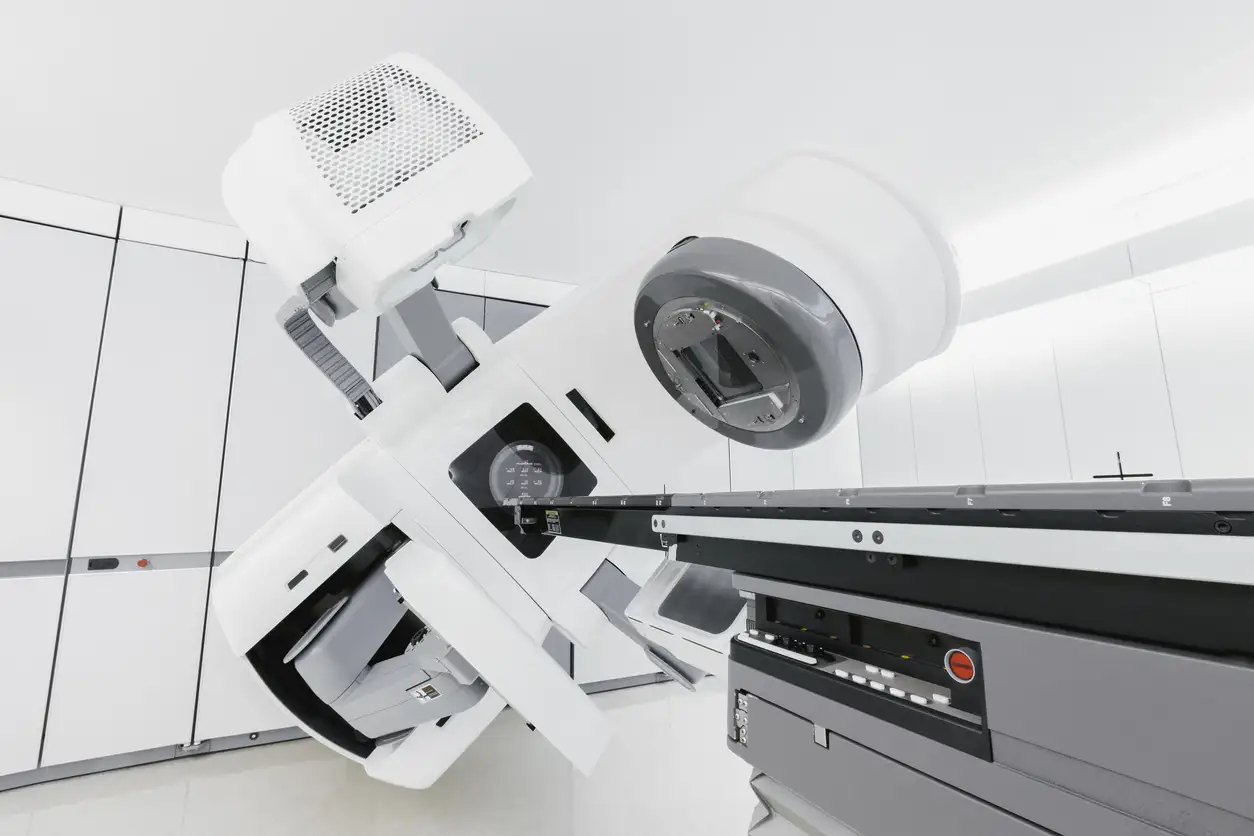
Radiation therapy is a treatment approach that uses carefully controlled doses of ionising radiation to target cancer cells. In the management of non-melanoma skin cancer, radiation can be delivered using several different technologies, each with distinct physical characteristics and treatment workflows.
Radiation treatments may be delivered from outside the body, from sealed radioactive sources placed close to the treatment area, or through specialised systems that apply radionuclides directly to the skin under controlled clinical conditions. The choice of approach depends on factors such as lesion characteristics, anatomical location, treatment objectives and clinician assessment.
Three radiation therapy subtypes include:
- External Beam Radiation Therapy (EBRT)
- Enclosed-isotope brachytherapy
- Skin-Directed Radionuclide Therapy
External Beam Radiation Therapy (EBRT)
EBRT uses equipment located outside the body to direct carefully planned doses of ionising radiation towards the treatment area.
Modern radiation therapy systems are designed to deliver radiation with precision, taking into account factors such as lesion size, location and surrounding tissue structures.
Treatment schedules vary and may involve multiple sessions over a period of days or weeks, depending on the prescribed treatment plan.
Key Characteristics
- Radiation is delivered from outside the body
- Treatment planning is tailored to the individual lesion
- Multiple treatment sessions may be required
- Widely used across many cancer types
Brachytherapy Using Enclosed Radioactive Sources
Brachytherapy is a form of radiation therapy in which a radioactive source is positioned close to, or within, the treatment area.
In conventional brachytherapy systems, the radioactive isotope remains enclosed within a sealed device or applicator. The radiation emitted from the source treats the target tissue while the radioactive material remains physically contained throughout the procedure.
Depending on the treatment approach, applicators may be positioned on or near the skin surface to deliver localised radiation.
Key Characteristics
- Uses sealed radioactive sources
- Radiation is delivered at close proximity to the lesion
- Treatment planning is tailored to the individual patient
- Designed to provide localised radiation delivery
Skin-Directed Radionuclide Therapy
A newer category of radiation treatment involves the use of open radioisotopes applied directly to the treatment area through specialised delivery systems.
One example is radionuclide therapy using the radioisotope rhenium 188. In this approach, a radioactive compound is incorporated into a dedicated application and applied directly to the lesion under controlled clinical conditions, with a protective foil placed between application paste and the skin.
The treatment utilises beta radiation emitted by rhenium 188. Beta particles have limited penetration into tissue, making this approach suitable for selected skin lesions when prescribed by appropriately trained clinicians.
Key Characteristics
- Uses an unsealed radioisotope formulation
- Applied directly to the treatment area over a protective foil
- Delivered through dedicated application systems
- Utilises the physical properties of beta radiation
Understanding Radiation in Skin Cancer Treatment
Although radiation-based therapies utilise different technologies, they all rely on the controlled delivery of energy to the treatment area.
The way radiation interacts with tissue depends on several factors, including:
- The type of radiation used
- The energy emitted
- The depth of penetration
- The treatment geometry
- The characteristics of the lesion being treated
These physical properties are important considerations when clinicians evaluate which treatment approach may be appropriate for a particular patient.
Choosing the Most Appropriate Therapy
There is no single treatment that is suitable for every patient or every lesion. Healthcare professionals consider numerous factors when recommending a treatment approach, including:
- The type of non-melanoma skin cancer
- Lesion size and depth
- Anatomical location
- Previous treatments
- Patient health status
- Individual treatment objectives
Patients should discuss available treatment options, expected outcomes and potential risks with their healthcare team before making treatment decisions.
Learn More About Your Treatment Options
Understanding the science behind modern skin cancer treatments can help patients participate more confidently in discussions with their healthcare professionals. If you have been diagnosed with non-melanoma skin cancer, speak with your treating clinician about which treatment approaches may be appropriate for your individual situation.
This information is intended for educational purposes only and should not replace professional medical advice. Treatment decisions should always be made in consultation with a qualified healthcare professional.
Sources:
- NCCN Clinical Practice Guidelines in Oncology: Basal Cell Skin Cancer.
- NCCN Clinical Practice Guidelines in Oncology: Squamous Cell Skin Cancer.
- European Association of Dermato-Oncology (EADO) Guidelines for Non-Melanoma Skin Cancer.
- Morton CA et al. European guidelines for topical photodynamic therapy.
- Guinot JL et al. Brachytherapy in skin cancer management.
- Delishaj D et al. Modern radiotherapy techniques for non-melanoma skin cancer.
- Rhenium-SCT® Instructions for Use and approved product documentation.
- Published peer-reviewed clinical studies evaluating rhenium 188 epidermal radionuclide therapy.